Sculptural wall brackets shift from support to statement, they hold space visually even when they hold nothing physically. That shift matters. Earlier, walls depended on them. Now, walls display them.
In older Indian structures, brackets carried balconies, beams, sometimes entire projections. You still see this in havelis across Rajasthan or temple corridors in the South, where carved supports sit under stone slabs. Those pieces solved load problems first. Decoration followed. Over time, concrete frames replaced that need. The bracket lost its duty but kept its form. That is where your opportunity begins.
A single sculptural wall bracket, placed alone on a blank wall, creates pause. It interrupts flatness. It throws a shadow that changes through the day. Morning light cuts sharp edges. Evening softens it. This movement gives the wall a rhythm without adding clutter.
Group them, and the wall starts behaving like a gallery. Not in the usual frame-and-art sense. More like fragments of architecture, suspended. You can mix heights, vary projections, even leave negative space between them. That gap matters as much as the object. It lets each piece breathe.
In smaller Indian apartments, where wall space competes with storage, this approach works because it doesnt demand depth. A bracket projects 4 to 8 inches on average. Enough to register. Not enough to crowd. That balance keeps the room open. You are not decorating. You are placing weight where there was none.
A corbel holds weight. It declares it. Thick. Deep. Grounded. It projects from the wall not as decoration, but as resistance. Gravity meets form here. Wood or stone extends outward, yet refuses to fall. The shape follows that tension. Stepped edges. Curved bellies. A slow widening back into the wall. Load disperses. Pressure dissolves.
In traditional Indian architecture, especially temple construction, the corbel performs a quiet transition. Square to circle. Base to dome. Geometry softens through mass. That logic still breathes inside every well-made corbel today. Remove the load, and the form still holds. That is its power.
A corbel does not need a shelf to justify itself. It carries visual weight. It feels complete, even in isolation. Place it under emptiness, and it still anchors the wall. Material decides how far this strength travels. Teak absorbs pressure with quiet confidence. Dense grain. High compressive strength. It holds, without strain. Stone goes further. Heavier. Stronger. But less forgiving to install.
Today, many corbels only perform the idea of strength. Hollow cores. Resin casts. Engineered wood. The structure is gone, but the silhouette remains. And the eye still believes it.
Read More : The Rise of 'Dopamine Decor' : Why Your Living Room Needs One Bold Conversation Starter
A corbel carries weight through mass. A bracket carries it through efficiency. The difference begins with proportion. Corbels extend deeper. Drop lower. Sit heavier. They feel anchored. Rooted into the wall. Brackets reduce that presence. Slim profiles. Clean lines. Minimal drop.
Material shifts the logic. A steel bracket, thin as a line, can outperform a bulky decorative corbel. Strength moves from volume to composition. From mass to material science. In Indian homes, the contrast becomes emotional. A carved wooden corbel beneath a pooja shelf feels sacred. Still. Almost ritualistic. A powder-coated metal bracket in a kitchen feels sharp. Functional. Easy to wipe. Same category. Different intent.
Load capacity only tells half the story. A thin steel bracket may carry more. But the corbel will always feel heavier. Because scale speaks. Detail speaks louder.
A sculptural wall bracket acts as an object first and a support second, sometimes removing function entirely. You read it like you would read a small sculpture. Edges, curves, surface texture, even imperfections. A chipped paint finish on wood tells a different story than a smooth plaster form. One carries time. The other carries control.
In many Indian homes, especially where people reuse old architectural fragments, this approach already exists without being named. Someone salvages a bracket from a demolished haveli, mounts it on a plain wall, and lets it sit. No shelf. No utility. Just memory held in form.
That is what defines sculptural use. Function becomes optional. Presence becomes essential.
Brackets became decorative once modern construction removed their structural necessity, allowing form to detach from function.
Reinforced concrete changed everything. Walls no longer needed projecting supports to carry slabs. Load moved into beams and columns. That freed the surface.
Designers and homeowners began isolating these forms. Instead of hiding them under beams, they brought them forward. Repetition replaced necessity. Lighting replaced shadow from load. The bracket moved from understructure to display.
In India, this transition overlaps with reuse culture. Old wood from dismantled homes doesnt get discarded easily. It gets reinterpreted. A bracket that once held a balcony might now sit in a living room as a standalone piece. The context changes. The form doesnt. This is not nostalgia It is continuity, adjusted for a different kind of living.
The best material depends on weight and wall feel. Choose based on load first. Then match the surface texture you want. Material also controls heat, touch, aging, and light reflection. In India, humidity and dust change performance. Coastal air accelerates rust. Dry heat cracks poor finishes. This is a practical decision, not just visual.
Wood brackets works best for warmth and natural aging. Teak and sheesham hold moderate weight with deep profiles. Teak contains natural oils that resist termites better than softwood. That matters in Indian homes. Over time, wood shows dents, polish wear, and colour shifts. These marks add character, not damage.
Metal works best for high strength with slim profiles. Powder-coated steel brackets carry heavy loads without bulk. A 6 mm steel bracket can support far more than a thick resin piece. This suits kitchens and study shelves. The coating slows rust in humid regions. Wipe it dry, and it lasts longer.
Plaster works best for detailed shapes without wall stress. It allows fine carving at a lower cost than wood or metal. You can paint it to match or contrast the wall. It chips on impact, so place it away from daily contact. Use it on feature walls, not busy corners.
Resin works best for budget and easy installation. It copies wood or stone at a lower price. It stays light, so installation is simple on most walls. This suits rental homes and temporary setups. The trade-off is strength. Use it for display, not heavy storage.
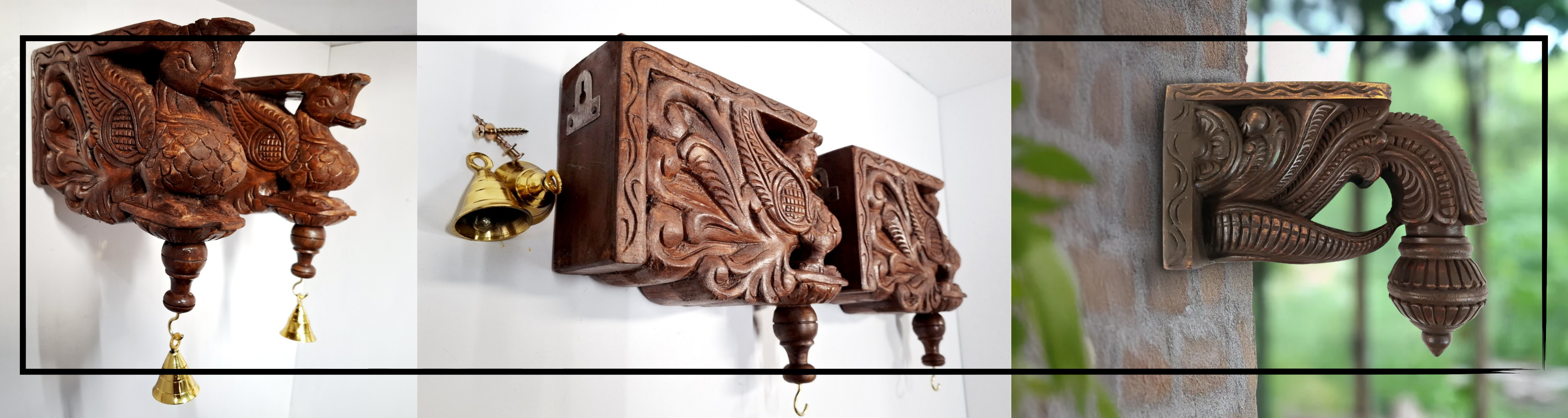
Metal and dense hardwood handle real load while maintaining visual structure. If you plan to place a stone top, a thick wooden shelf, or anything with actual weight, metal gives you reliability. Steel distributes load efficiently even in slimmer forms. Hardwood follows closely, especially when the section thickness stays substantial.
There is a factual baseline here. Mild steel has significantly higher tensile strength than wood, which is why thinner metal brackets can carry loads that require much thicker wooden sections. That difference lets you choose between visual heaviness and structural efficiency.
Material should repeat what already exists in the room so the bracket feels placed, not added. A lime-plastered wall paired with carved wood creates continuity. Both surfaces absorb light softly. They sit in the same visual language. In contrast, a concrete wall with black metal brackets creates sharper edges. Light reflects differently. The space feels more controlled.
Indian homes often mix materials naturally, stone flooring, wooden furniture, painted walls. The bracket should pick one of these and echo it. Not all. Just one strong repetition. That restraint keeps the composition clear. You are not selecting material in isolation. You are extending what the room has already started.
Place objects that carry form, height, and a clear silhouette so the bracket reads as a stage, not storage.
A bracket asks for intention. Not clutter. One object per piece works best in most Indian homes where wall depth stays limited. You are working with projection, shadow, and pause. The object should complete that composition, not compete with it.
Classic pairings hold because they respect proportion. A small bust, for instance, sits comfortably on a corbel because both share vertical weight. The base aligns, the head rises, and the eye follows that line. You see this in older colonial interiors across Mumbai where plaster brackets carry figurative forms under soft lighting.
Trailing plants shift the mood. A money plant or pothos softens the edge and introduces movement. Leaves fall over the sides, breaking the hard geometry. In warmer Indian climates, these plants also survive indoors with minimal care, which keeps the display alive without effort.
Antique vases bring density. Terracotta, brass, or even blue pottery from Jaipur works because the surface catches light differently through the day. Clay absorbs light. Brass reflects it. That contrast adds depth without adding more objects.
Modern styling changes the logic but keeps the restraint. A small abstract sculpture, especially in metal or resin, works when the room already leans minimal. Stacked books create a horizontal pause. Two or three books only. Their spine colour should connect with the room, not shout over it. A small object on top of the stack completes the layer.
Framed art can lean against the wall on a deeper bracket. This works when projection allows at least 6 inches. The frame rests, slightly angled, creating a casual gallery feel without drilling multiple holes. In rental homes, this approach reduces wall damage while still building a visual narrative.
There is a factual constraint here. Most standard decorative brackets support between 5 to 15 kg depending on material and wall fixing. That limit should guide what you place. Stone sculptures or heavy planters need proper anchors or should stay off.
You are not filling space. You are editing it.
Limit each corbel to one primary object and one supporting element so the structure stays visible.
A corbel already carries visual weight. Its carving, its depth, its shadow, these elements occupy space even before you add anything. If you overload it, the form disappears.
Start with the primary object. It should align with the corbels width or sit slightly within it. Oversized pieces break balance. Undersized ones feel lost. This proportion control keeps the eye steady.
Then, if needed, add a secondary element. A small trailing plant beside a bust. A candle next to a vase. Keep height variation but avoid equal sizing. Equal objects create competition. Unequal ones create hierarchy.
In Indian interiors where colour already exists through textiles, rugs, and wall paint, neutral objects work better on brackets. Stone, wood, muted metal. They hold ground without adding noise.
Light completes the styling. A simple warm spotlight above the bracket changes everything. Shadows deepen. Edges sharpen. The object feels placed with intent. Even a basic LED picture light can achieve this without heavy installation.
The goal is clarity. One bracket. One idea.
Modern displays use fewer objects, sharper materials, and intentional negative space to create a gallery-like wall.
You move away from ornament-heavy setups. You let the bracket breathe.
Contemporary sculptures, especially in matte black metal or textured resin, sit well in modern Indian apartments where walls often stay neutral. These materials handle dust better and require less maintenance, which matters in urban settings.
Books introduce a personal layer. Not as a library. As a signal. A single stack can reflect taste without occupying space. In cities like Pune or Bangalore, where compact living defines layout, this approach keeps things light.
You can also treat brackets as anchors within a larger gallery wall. Place a framed artwork above, a bracket below, and leave space in between. That vertical layering breaks the flatness of traditional gallery walls and introduces depth.
Mirrors on brackets create another dimension. A small framed mirror leaning against the wall reflects light back into the room, which helps in tighter Indian apartments with limited natural light.
There is no need to match everything. There is a need to relate everything.
Hang brackets so their center sits between 57 to 60 inches from the floor, aligning with average eye level.
This measurement comes from gallery standards used worldwide and adapts well to Indian homes where ceiling heights typically range between 9 to 11 feet. When you place the center of the bracket at this height, the object on it naturally falls into comfortable viewing range.
If you install a pair, maintain this center line across both. Misalignment shows immediately because brackets rely on symmetry more than flat art frames.
In living rooms with seating, you can drop slightly lower. Around 52 to 55 inches works when people remain seated most of the time. The viewing angle changes, so the height should follow.
Precision matters here. Even a 1-inch difference becomes visible.
Keep 12 to 24 inches between brackets depending on their width and projection to avoid visual crowding.
Spacing controls rhythm. Too close, and the pieces merge into one heavy block. Too far, and the connection breaks.
For smaller brackets under 6 inches wide, 12 to 15 inches gap works well. It keeps continuity without overlap. Larger corbels need more breathing room. Around 18 to 24 inches allows each form to stand independently.
Indian walls often carry switches, wiring lines, or existing fixtures. Work around these but maintain equal gaps wherever possible. Uneven spacing looks accidental unless you intentionally build an asymmetrical layout.
A practical detail: mark positions with masking tape first. Step back. Adjust visually. Then drill. This avoids unnecessary wall damage, especially on plaster or painted surfaces.
Use equal height and spacing for symmetry; vary height and gap deliberately for asymmetry while keeping visual balance.
Symmetry feels formal. You place two or more brackets at the same height, equal distance apart. This suits entryways, pooja areas, or spaces where you want order. The eye reads it quickly. The mind settles.
Asymmetry feels dynamic. You shift heights slightly, vary spacing, maybe combine different bracket sizes. But balance still matters. If one side feels heavier, the arrangement fails. You correct this by adjusting object size or visual weight, not just position.
In Indian homes with mixed furniture styles, asymmetry often works better. It allows old and new pieces to coexist without forcing uniformity. A carved wooden corbel can sit beside a slim metal bracket if spacing and height create balance.
Think in terms of weight, not just measurement. What looks stable often matters more than what measures equal.
Mark height, fix anchors based on wall type, align brackets, and test load before final styling.
Start by identifying wall type. Brick and concrete walls, common in India, hold anchors well. Use proper wall plugs and screws. For gypsum or hollow walls, you need specialized anchors to prevent loosening.
Mark the center height first. Then mark screw points using the bracket itself as a guide. Drill carefully. Insert anchors. Fix the bracket tightly so it sits flush against the wall.
Before placing any object, test the load with your hand. Apply downward pressure. If it shifts, refix immediately. This step prevents accidents, especially with heavier materials like wood or metal.
Place brackets where movement and sightlines already exist. They should feel integrated, not added. Follow how people walk. Follow where the eye rests. This keeps the bracket quiet, but present.
In the living room, frame the focal point with corbels. Place them on either side of a TV unit or fireplace wall. They define the area without extra furniture. Wood works well here. It adds warmth and supports moderate weight. Teak and sheesham age well in Indian conditions.
In bedrooms, use brackets as floating nightstands. Fix them beside the bed at mattress height. Usually 2024 inches from the floor. Adjust to your bed height. Metal brackets work better here. They carry more weight in less space. This helps in compact rooms.
In bathrooms, choose moisture-resistant materials. Place smaller brackets near the mirror or beside the washbasin. Resin and coated metal resist humidity better. Indian bathrooms face constant moisture. These materials reduce damage and maintenance.
In entryways, use one bracket to anchor the space. Place it near the door where the eye lands first. It can hold keys, a small planter, or nothing. The function stays flexible. The presence stays strong.
Each room changes the role of the bracket. Same object. Different behaviour.
Match the fixing method to your wall type and calculate load before drilling so the bracket holds steady over time.
Indian homes use brick, concrete, or gypsum boards. Each behaves differently. Brick and concrete hold screws directly with wall plugs. Gypsum needs cavity anchors that expand behind the board. If you ignore this, even a strong bracket will loosen.
Start by checking what sits behind the wall. Tap the surface. A solid sound means brick or concrete. A hollow sound signals drywall. For hollow walls, use toggle bolts. They open inside the cavity and spread weight across a wider area. Plastic anchors work only for lighter loads.
Weight calculation is simple but often skipped. Add the weight of the bracket and the object you plan to place. Then choose an anchor rated for at least double that load. For example, if the total weight reaches 10 kg, pick a fixing that handles 20 kg. This margin accounts for movement, vibration, and long-term wear.
A factual grounding detail matters here. Standard metal toggle bolts used in drywall can support around 2050 kg depending on size and installation quality. That makes them reliable for most decorative displays.
Read More : DIY Block Printing: Creating Your Own Sustainable Table Linens
Buy from salvage yards for age, and artisans for control. This balances authenticity with exact sizing.
Salvage yards in Jaipur, Jodhpur, and Ahmedabad offer original pieces from old buildings. These show real wear. Edges soften. Surfaces deepen. You see age, not polish. That texture adds instant depth to a wall.
For custom needs, hire local artisans. Woodworkers shape teak and sheesham to your required projection and scale. Teak resists termites due to natural oils. This suits Indian climates with heat and humidity. You control size, finish, and proportion.
Online platforms solve availability. They offer resin and metal options. Resin keeps cost low and stays lightweight. Easy to install on most walls. Metal gives higher strength with a slimmer form. Good for tighter spaces.
A factual detail matters. Reclaimed teak lasts decades because it naturally resists pests better than many hardwoods. This makes reuse practical and reliable.
Build age through layers, not paint alone. Use texture, wear, and uneven tones to create depth.
Start with wood or resin. Sand lightly to remove factory smoothness. This helps paint grip better. Apply a base coat in off-white, lime, or grey. Keep it uneven. Imperfection adds realism.
Add a darker tone with a dry brush. Drag across edges and raised areas. High points catch colour. Recesses stay lighter. This creates natural contrast.
For plaster texture, mix wall putty with water. Apply thin patches. Press and pull, not smooth. This forms irregular surfaces like aged lime walls.
Let it dry. Sand edges gently to expose lower layers. This mimics long-term wear. Finish with a matte sealer. It protects without shine.
A factual detail grounds this. Lime-based finishes stay breathable. They handle Indian humidity better than thick synthetic paints. Less peeling over time.
You are not painting a bracket. You are shaping time on its surface.
Read More : Tactile Intelligence: How the Texture of Your Door Handle Elevates the Everyday
Yes, if form and placement carry enough visual weight. Remove function. Let the shape lead.
Without objects, the eye studies contour and shadow. It reads proportion, not purpose. This shift creates focus.
Choose pieces with deep carving or strong profiles. These hold attention longer. The empty space above builds tension. The mind expects use. It finds none. That contrast creates interest.
Placement matters more here. Keep it at eye level. Leave clear space around it. Too close to furniture weakens impact. Too high breaks connection.
Material changes how it feels. Wood adds warmth and memory. Metal brings sharpness and precision. Plaster softens light and edges. Each choice changes the mood.
A factual point matters. Decorative pieces still weigh 2 to 6 kg on average. Fix them properly. Strength stays essential, even without load.
Nothing rests on it. Still, it anchors the room.






 SignIn / SignUP
 Forgot password
 My Orders
 My Wishlist
  My Wallet
 My Invitee
 Sell with us
 New Arrivals