There was a time when everything had to be white. Clean. Minimal. Almost of feeling empty. Walls that didnt speak, spaces that behaved. And for a while, that made sense. It felt safe. Controlled. Predictable. But something has shifted, dark glamour slowly entered in interiors, which is known as moody interiors.
Mood interiors are known for their darker tones. Tones like deep charcoals, forest greens, burnt umbers, inky blues are prime example of darker tones, and they dont try to reflect light, they absorb it. They hold it. They create corners, shadows, pauses. And in those pauses, room begins to feel layered, almost like it has a depth. You walk into such a space and it doesnt reveal itself immediately. It unfolds. Slowly. Like a conversation that takes its time. And maybe that is why people are drawn to it now. Because in a world that is constantly loud, bright, and fast, there is something incredibly intimate about a room that feels like it is whispering instead of shouting.
There is a catch, if dark colours are left alone, can become too heavy. Too enclosed. It needs interruption. A moment of contrast. A breath. That is where the Vintage Venetian mirror quietly takes its place. Not loudly. Never loudly. It doesnt demand attention, it earns it.
Set against a dark wall, its presence is almost poetic. The aged glass, slightly imperfect, catching light in fragments rather than reflections. The delicate carvings, echoing a past that feels distant but not lost. It doesnt just reflect the room; it distorts it gently, softening edges, adding a sense of depth that feels almost cinematic.
- Venetian mirror breaks the density of dark walls without disturbing their mood
- It introduces light, but in a restrained, diffused manner
- Venetian mirror adds history and character, something modern spaces often lack
- It becomes a focal point without overpowering the room
There is something very human about that balance. The way it holds both shadow and light at the same time.
A venetian mirror that does not just reflect you, but absorbs you. Holds you for a second longer than necessary. It doesnt sit quietly on a wall. It carries with it a softness of time, mastery of craftsmanship and elegance.
You dont just look into it. You enter it.
Read More : Hooks & Hangers as Art: Designing a 'Sculptural Mudroom' for Modern Living
The story begins in Murano, an island that feels less like location and more like a secret. For centuries, Murano glassmakers guarded their craft like a ritual. Not just technique, but intuition. Fire, sand, breath, transformed into something almost liquid in emotion. Venetian mirrors were not only functional objects but also a statements of refinement, symbols of quiet wealth,and reflections of artistry.
Unlike conventional mirrors that rely on heavy wooden or metal frames to define them, Venetian mirrors dissolve that boundary. They had glass frame, etched, beveled, carved into fragile florals, curling vines, and soft geometry that feels intentional like frost on a window.
There is an absence of weight, visually. No harsh borders. Just light interacting with itself.
Look closely and youll notice:
- Hand-etched detailing, never perfectly symmetrical, always slightly human
- Floral glass motifs that seem to bloom outward rather than sit still
- Layered panels of glass, joined like a quiet collage
- A silvery backing that has aged into something warmer, softer, less reflective and more interpretive
It is not perfection that defines these mirrors. It is the imperfection of time.
A vintage Venetian mirror does not announce its authenticity loudly. It whispers it. You have to lean in.
The market today is flooded with reproductions, some beautiful, some convincing, but there is a difference. Not just in look, but in feeling. A genuine piece carries time inside it. And time always leaves traces.
Heres how you begin to notice:
| Feature | Authentic Vintage Venetian Mirror | Modern Reproduction |
| Patina |
Soft, uneven aging with slight cloudiness; reflection feels muted, almost poetic |
Clean, sharp, overly clear reflection |
| Oxidation |
Gentle dark spots or foxing at edges and corners; never uniform |
Either completely absent or artificially added in patterns |
| Weight |
Heavier than it looks due to layered glass craftsmanship |
Often lighter, simplified construction |
| Etching Detail |
Slight irregularities; hand-done lines that feel organic |
Perfect, machine-like precision |
| Glass Tone |
Warmer silvering, sometimes with a faint golden or smoky hue |
Bright, cool-toned mirror finish |
Befor pairing a Venetian mirror with a moody palette. Here are some examples of Moody color palette that you can incorporate in your interiors
There is a certain stillness in deep blue. Against a midnight blue wall, the mirror softens. The silvering of venetian mirror begins to glow rather than shine. The etched details catch fragments of light, almost like distant stars, subtle, scattered, never overwhelming.
This pairing works because both elements understand restraint. The blue absorbs. The mirror releases. Together, they create a quiet tension.
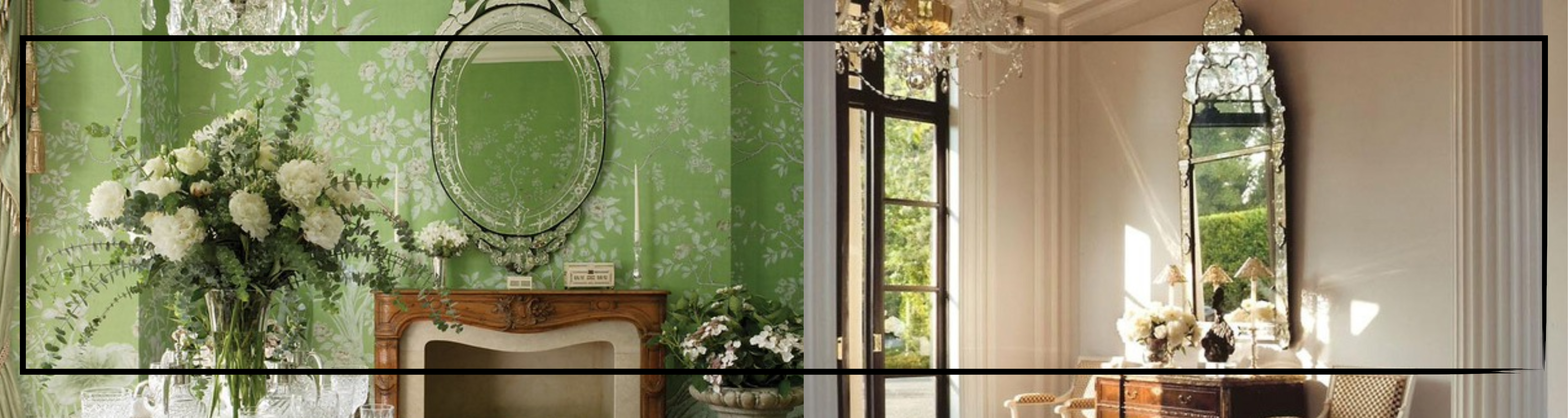
Green, when deepened, becomes something else entirely. It moves away from freshness into richness. Into something almost tactile.
Placed against forest or emerald green, the mirror feels grounded. The organic motifs in the glass, those soft florals and curling vines, suddenly make more sense. They echo the palette. They belong.
This is where it stops being an object and starts becoming part of the environment.
Theres also a certain luxury in this combination of a room that has aged beautifully, without trying to stay modern.
Dark charcoals and black tone create the strongest contrast, in a controlled, deliberate way. The mirror becomes the light source, visually.
In these setting, every etched detail becomes more pronounced. The edges sharper. The reflection more dramatic.
But heres the nuance, because the surface itself is aged, it never feels stark. The softness of its patina tempers the intensity of the dark walls.
This is contrast without aggression.
There is something deeply emotional about plum tones. They sit somewhere between warmth and shadow. When paired with this piece, these shades create a kind of theatricality in layers. The surface reflects the richness of the color, but its aged finish distorts it slightly, softens making interiors composed cinematic.
Contrast works because it balances light and weight in one frame. Dark walls absorb light. The mirror returns it in softer fragments. This pairing keeps the mood intact while adding clarity. You get depth without losing visibility. The room feels grounded, not heavy.
A Venetian mirror spreads existing light across the room. Dark walls trap light. The mirror redirects it. This improves visibility without adding harsh brightness. Lamps, candles, and windows feel stronger. You need fewer light sources. The aged glass softens reflections. It reduces glare and keeps the mood calm. Light feels diffused, not sharp. You see movement of light, not just its source. That adds atmosphere without clutter.
This pairing works because it mixes smooth glass with dense walls. Dark paint feels solid. The mirror introduces fine detail. Etched patterns catch light at different angles. This adds depth without extra objects. You avoid visual clutter. The glass surface stays light in appearance. The wall stays heavy. This contrast creates balance. You get texture without adding bulk. The room feels layered but controlled.
Each room uses the mirror differently. Placement changes function and mood.
Place the mirror above a dark wood console to anchor the entry. The console adds weight. The mirror reduces visual heaviness. This setup reflects movement as you enter. It makes the space feel active, not empty. Add a lamp or candles on the console. The mirror spreads that light upward. The entry feels brighter without losing depth.
You also get a quick functional check before leaving. It serves both use and atmosphere.
Place the mirror above a velvet headboard for balance. Velvet absorbs light. The mirror releases it. This creates a soft push and pull effect. The bed feels grounded. The wall feels lighter. Use an accent wall in deep tones. The mirror breaks the density without removing it.
At night, reflections soften the room. The light feels warmer and less direct. This improves comfort and mood. You also add visual height above the bed. The room feels slightly larger.
Use the mirror as the focal point in a small dark bathroom. Compact spaces benefit most from reflection. The mirror increases perceived space. It makes the room feel less enclosed.
Place wall lights beside it. Light bounces multiple times in a small area. This improves brightness quickly. Etched details appear sharper at close distance. You get more visual impact in less space. The result feels intentional and contained. Not cramped.
Place the mirror where it reflects the dining table. It multiplies candlelight and glass reflections. This adds warmth during evening meals. You need fewer decorative elements. Reflections create depth across the wall. The room feels fuller without adding furniture.
Crystal and glassware scatter light. The mirror spreads those highlights across the space. This builds atmosphere without effort. The room feels active even when still.
Use supporting materials to complete the look. Each one adds a clear function.
Velvet absorbs excess light and reduces glare. This keeps the room calm. Its surface shifts tone with movement. The mirror reflects these changes. You get dynamic texture. It also adds softness to hard surfaces. Seating feels more comfortable.
Brass adds warmth against dark tones. It prevents the room from feeling cold. Brushed finishes reduce shine. This keeps the look controlled.
Unlacquered brass ages over time. It develops patina that matches the mirrors surface. You get continuity in materials. Nothing feels too new or out of place.
Dark walnut grounds the space with natural weight. It supports lighter elements. The grain adds subtle texture without pattern overload. This keeps the room clean. Use it for consoles, tables, or bed frames. It stabilizes the layout visually. You get durability and structure in one material.
Marble introduces contrast through tone and pattern. It breaks the depth of dark colors. Light veining adds movement without clutter. The mirror reflects and softens these lines. Use it on tabletops or vanities. It adds brightness in controlled amounts.
You get a cool surface that balances warmer materials.
Read More : Tactile Intelligence: How the Texture of Your Door Handle Elevates the Everyday
Lighting works best when it stays warm, layered, and indirect. This keeps the mood intact and improves visibility. Light should not overpower the glass. It should move across it. This reveals detail without flattening the surface. Warm light below 2700K mimics candlelight. It supports deeper tones and reduces glare.
Place sconces on both sides to control light direction. Side lighting highlights edges and etched details. Keep lights at eye level or slightly above. This centers reflections and avoids uneven shadows. Use bulbs at 2700K or lower. Warm tones soften reflections and reduce harsh contrast. This improves comfort in low-light rooms. You see clearly without adding brightness.
Candlelight adds movement. Flames flicker, and the glass reflects shifting highlights. This creates multiple soft reflections. The room feels active without extra dcor. Candelabras increase this effect. More flames create layered light patterns across the surface.
Avoid placing strong lights directly in front. Direct light causes glare and hides fine details. Let light hit from angles. Angled light reveals texture and depth in the etched borders. Add a low light source below if possible. A lamp or candles help light travel upward. This spreads illumination across the wall. The space feels taller and less enclosed.
Choose brass or bronze fixtures. These materials add warmth and reduce sharp reflections. Avoid polished chrome. It reflects too strongly and introduces a cold tone. Use fabric or frosted glass shades. These diffuse light and prevent harsh edges. Spacing matters. Keep lights slightly away from the mirror edges. This prevents crowded reflections. Material benefit: Warm lighting protects visual comfort. It reduces eye strain and keeps the atmosphere calm.
Gentle cleaning preserves the original silvering and prevents damage. Strong methods remove it. Antique backing remains sensitive to moisture and chemicals. Care should stay minimal and controlled. Fact: Traditional mirror silvering uses a thin metal layer. Moisture and ammonia can break it down.
Use a dry microfiber cloth for regular dusting. This removes particles without scratching. Spray cleaner onto the cloth, not the glass. This prevents liquid from reaching the edges. Choose ammonia-free solutions. Harsh chemicals damage the silver backing over time. Wipe gently with straight strokes. This reduces streaks and protects the surface.
Dry immediately with a second cloth. This prevents water marks and residue. Avoid cleaning the edges too much. Most desilvering starts at the borders. Do not touch the back. The reflective layer sits there and can come off easily. Keep the mirror in low-humidity spaces. Moisture accelerates oxidation and dark spots.
If used in bathrooms, ensure ventilation. Exhaust fans reduce moisture buildup. Avoid direct sunlight. Heat weakens adhesives and affects the backing layer. Handle with clean hands. Oils leave marks and attract dust. Accept small spots or fading. These marks show age and do not affect function.
Read More : Heirloom Hardware: How to Integrate Metal Door Knockers with Modern Smart Locks
For major repairs, consult a professional. DIY fixes often remove original character. Material benefit: Proper care extends the life of the glass and preserves its reflective quality. Regular light cleaning works better than heavy cleaning. It keeps the surface stable over time.






 SignIn / SignUP
 Forgot password
 My Orders
 My Wishlist
  My Wallet
 My Invitee
 Sell with us
 New Arrivals