Dopamine decor is not something that starts with rules. It is more like a feeling you notice before you even think about it. You walk into a room and something just settles a bit. The light feels softer, the space does not push you out, and you dont feel like leaving immediately. You just stay there for a while without questioning it. That pause is really what this whole idea is about. It is not a fixed style or a colour scheme. It is just about making a space feel close to you, like it fits you without trying too hard.
The word dopamine comes from the body, that chemical linked to feeling good, but here it is not really about science. It is more about sensing things. Like that one colour you always end up liking without knowing why, or a surface you keep touching, or even a small object that carries a memory. When you start thinking like this, the room changes. It is not just about how it looks anymore. It is about how it feels when you actually live in it. What you see, what you touch, and what stays in your mind, all of it starts working together.
Link between design and mood usually starts with light. Nothing dramatic. Just sunlight coming in and sitting on a wall or spreading across the floor. It does not feel harsh, it feels easy on the eyes. Then there are small details you dont consciously think about but still notice. Like a wooden handle that feels right in your hand, or a ceramic knob that feels a little cold in the morning. These things are small but they stay with you.
Colours shift the mood without doing much. Bright colours like orange or blue make the room feel more active, a bit more alive. Softer shades like light green or peach calm it down without making it boring. When these colours sit together, not perfectly matched but just placed naturally, the room feels balanced. Texture adds another layer. A cushion that sinks in a little, a rug that feels slightly rough under your feet, a metal surface that stays cool, all of this keeps the space from feeling flat. It starts to feel real.
Honestly, your space does not need to look perfect to feel right. Books can lean, things dont have to match, and you can have random objects that still belong there. That is what makes it feel natural. In most Indian homes, this already exists. Different colours, different fabrics, old things next to new ones, nothing is too planned but it still works. It does not feel messy, it feels lived in. And I think that is what most of us actually want, a space that feels like ours without forcing it.
Read More : Heirloom Hardware: How to Integrate Metal Door Knockers with Modern Smart Locks
A room does not need more things. It just needs one thing that holds everything together.
When you walk into a space, your eyes dont want to look at everything at once. You naturally look for one spot to settle on. If that does not exist, the room starts feeling a bit messy, even if it is not. That is where a focal point comes in. One piece that quietly takes charge. It does not have to be loud, it just needs enough presence so the rest of the room starts falling into place around it.
See, the problem is not too many colours or too many objects. The problem is when everything is trying to stand out at the same time. That is when a space feels noisy.
A hero piece fixes that. It gives the room a centre. It can be anything. A bold chair, a big artwork, a wooden table with some weight to it, even a light hanging low enough to catch your eye. Once that one thing is there, everything else naturally becomes softer. You dont have to force balance, it just starts happening. And honestly, in Indian homes this is already there. Think about a jhoola in the living room, or that one bright rug in the centre, or a brass lamp in the corner. These things were never placed with design rules in mind, but they still anchor the space. Even if the rest of the room keeps changing, that one piece holds it together.
Also, it does not have to be expensive. It just needs character. Sometimes colour does that, sometimes texture, sometimes just memory. Even a simple chair can become the main piece if it feels right.
Now when people come over, this piece starts doing something else. People notice it. They move towards it. They ask about it without you even trying. Where did you get this from. Is this old. There is always a small story there. That one object makes the space feel open. It removes that little awkward start when someone enters a room. And the best part is, it happens naturally.
Things that are not too perfect work better here. A slightly rough wooden surface, a handmade ceramic piece, a fabric where you can see the weave, these things pull people in. They feel real. People connect with that.
A room needs direction. Otherwise your eyes just keep moving and never settle. That one strong piece gives direction. Your eyes go there first, and then slowly move around. The rest of the elements dont have to fight for attention anymore. Softer colours stay in the background, smaller objects just support, textures add depth without making things heavy. So it is not about removing things. It is about letting one thing lead. Once that happens, the whole space feels calmer. More clear. More like it belongs to you. You stop trying to make everything stand out, and you just let one thing do the job. And tell me honestly, does a room not feel better when it knows where to begin?
A living room should not feel quiet. It should give you something to look at, something to touch, something to casually talk about.
When someone walks in, there is always that small moment. They look around, settle in, and the room either opens up or feels a bit flat. That usually depends on whether there is something that catches attention without forcing it. You dont need many things for that. Just a few pieces that carry some colour, texture, or a bit of personality. Those pieces do the talking for you.
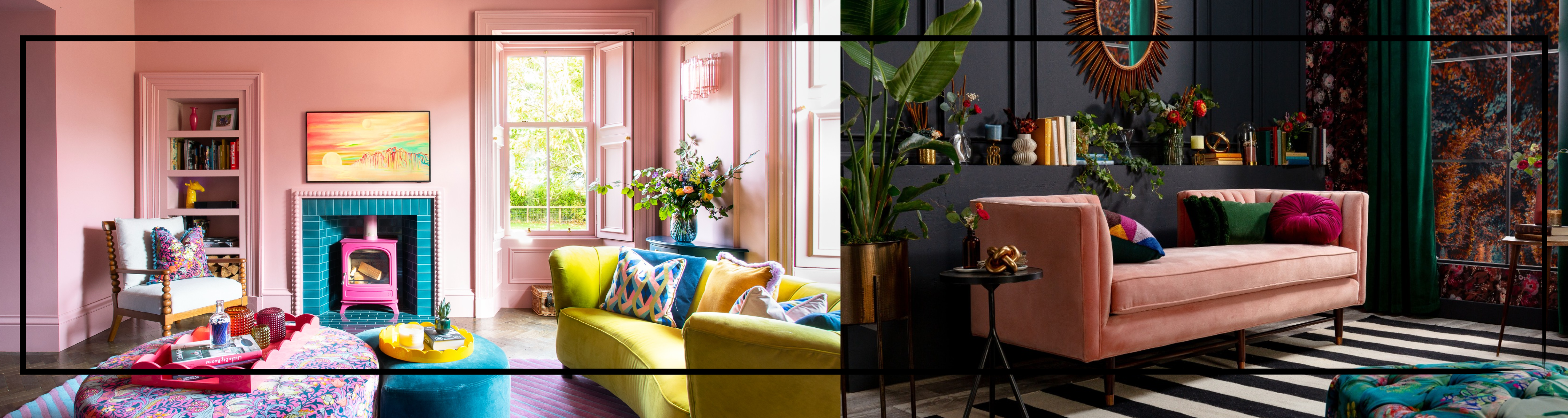
Start with your seating. If your sofa just blends in, the room loses a lot of energy. Try something in a deep velvet fabric, like blue, green, or even a warm pink. It should feel soft but slightly heavy when you touch it. That kind of seating naturally pulls people in. They notice it first, they sit there, and somehow that becomes the main spot in the room.
Walls dont always need small frames. One big piece can do more than ten small ones. It could be a large painting, a long fabric hanging, or something slightly unusual in shape. Once you increase the size, the wall stops being empty and starts feeling like part of the room.
Lighting can change everything without you realising it. A lamp with a soft rounded shape or something that throws light in patterns makes the room feel different at night. The light spreads slowly, corners feel softer, and the whole space feels calmer. It is not just about brightness, it is about how the light sits.
Your coffee table does not have to be basic. A curved edge, a slightly different shape, or even a base that looks a bit sculpted can change the whole centre of the room. It adds movement. It makes the space feel less stiff.
Then there are those pieces that are just a bit playful. A small bar cart, a ceramic animal, something that feels slightly unexpected. Indian homes already do this well. Useful things that also have character. These pieces make the room feel easy and personal.
You dont need to overthink this. Just let one thing lead and keep the rest simple.
| Design Element | Dopamine Decor Approach | The Bold Twist |
| Color Palette |
Pick 2 to 3 strong colours for the room |
Let one piece carry the strongest colour so it stands out |
| Texture |
Mix soft, smooth, and slightly rough surfaces |
Choose something that makes you want to touch it |
| Scale |
Go a little bigger than what feels safe |
Small looks random, bigger starts to feel like art |
Start with colour. Keep it limited. Let your main piece hold the boldest shade so your eyes go there first. Then think about texture. If everything feels the same, the room feels flat. When textures change, the space starts feeling real. And scale is important. If something is unique, dont make it too small. Let it have space so it actually feels like a part of the room, not just an extra object.
In the end, it is not about adding more things. It is about choosing one thing properly and letting everything else settle around it. The space feels lighter, clearer, and more like yours. Does a room not feel better when it gives you something to notice and talk about without trying too hard?
Read More : Tactile Intelligence: How the Texture of Your Door Handle Elevates the Everyday
You really dont need a big budget to make your room feel different. Most of the time, it is not about buying new things. It is about taking one thing you already have and changing it in a way that actually stands out.
A lot of spaces feel dull because everything looks similar. Same colours, same finishes, nothing really catches your eye. The moment you change even one piece properly, the whole room starts feeling a bit more alive. And the best part is, when you do it yourself, it feels more personal.
Just pick something old. A small table, a chair, even a frame. You will easily find something at home or in a local market. Earlier also, people reused furniture all the time. They just painted it again and used it.
Now instead of a safe colour, go for something bold. A bright pink, a sharp green, or even a strong orange. When you paint it, dont worry about making it too perfect. Let the surface show a bit. The wood texture, the slight unevenness, all of that actually makes it look better. Once you place it in your room, it will stand out on its own.
If you have small things lying around, dont spread them everywhere. Just bring them to one place.
Old photos, small frames, random pieces you have collected, even bits of fabric. Put them together on one wall. Earlier also, homes had this kind of setup, just not in a planned way. Now if you arrange them properly, they start looking like one big piece.
Your wall gets more depth. Your eyes move slowly across it. It feels like a story instead of random items.
This is the easiest thing you can do.
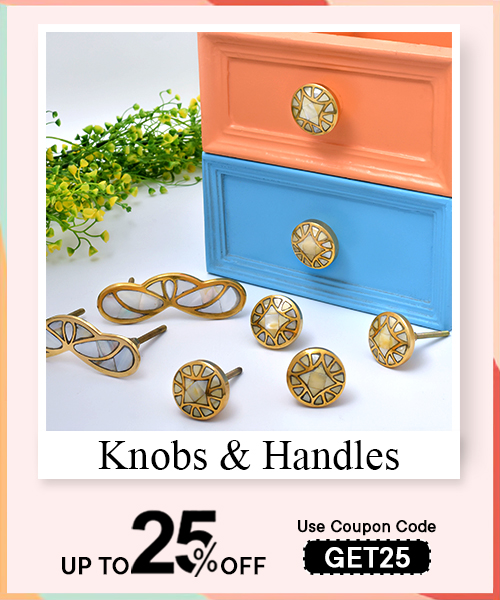
Just change your handles and knobs. Thats it. Cabinets and drawers usually have very basic ones. Replace them with something bigger, more colourful, or with a different texture. Maybe a smooth resin knob or a slightly rough ceramic one.
You use these every day, so you actually feel the change. It is not just visual. It becomes part of your routine.
Read More : A Guide to Jewelry Architecture: Transforming Your Home with Sculptural Hardware
It is not a fixed style. It is not rules.
It is just decorating your space with things that make you feel good when you see them or touch them. That could be colour, texture, light, or even an object that holds a memory. Most people are not decorating to follow trends. They are decorating to feel comfortable, calm, or a little happier in their own space
So it is less about how the room looks from outside, and more about how it feels when you sit inside it.
It can look similar, but it is not the same.
Maximalism is about more. More colours, more patterns, more layers. Dopamine decor is more personal. You can have a very simple room and still follow this idea if one or two things in it bring you joy.
You do not need to fill the room. You just need to choose what actually connects with you. Even experts say it is about selecting things that feel right to you, not just adding bold items blindly
There is no fixed colour.
But bright, strong colours like yellow, orange, pink, or blue are often used because they feel more active and alive. These colours catch light and make a space feel awake.
At the same time, the best colour is always the one you already like. If a soft green calms you, that works. If a bold blue excites you, that works too. It depends on your memory and your comfort.
It can, but not in a magical way.
When you surround yourself with things you like, your space starts feeling safer and more comfortable. That alone can lift your mood a little. Many people decorate their homes mainly to feel better, not just to make them look nice
But it is not a solution for everything. It is a small support. A room can help you feel at ease, but it cannot fix everything outside it.
Start small.
You do not need to change the whole room. Even one cushion, one lamp, or one painted surface can shift the mood. Designers also suggest starting with small changes instead of doing everything at once
Pick one thing that stands out. Let it sit in the room. Then slowly build around it if needed.
This is where most people get confused.
The idea is not to add many bold things. It is to choose one main piece and let it lead. Keep some neutral space around it so your eyes can rest. Even bold rooms need balance, otherwise they start feeling heavy
So instead of filling every corner, leave some space empty. That is what makes the bold piece stand out.
Because people are tired.
Minimal spaces started feeling too cold. Perfect spaces started feeling distant. People wanted something that feels like them.
Dopamine decor grew as a response to that. It is about comfort, identity, and small daily joy, not perfection
Not really.
You can repaint something you already have. You can move things around. You can bring small changes in colour or texture. Even adding a bright cushion or changing a lamp can shift the space
It is more about how you use things than how much you buy.






 SignIn / SignUP
 Forgot password
 My Orders
 My Wishlist
  My Wallet
 My Invitee
 Sell with us
 New Arrivals