Vintage Glass Knobs are trending because people want homes with more personality. Modern furniture often looks neat and functional. Sometimes it feels a little flat.
A vintage glass knob changes that instantly. It introduces colour. It introduces texture. It creates a small point of interest on a wardrobe, cabinet, or drawer.
The appeal comes from the material itself. Glass reacts to light throughout the day. Morning sunlight feels different from evening lamp light. The surface keeps changing without demanding attention.
Many homeowners also prefer upgrades that do not require renovation. Replacing a knob takes only a few minutes. Yet the furniture feels completely different afterwards.
That balance matters. Small change. Visible impact. Practical improvement. Decorative value.
Texture changes how a room feels long before anyone notices it.
Most people focus on wall colours and furniture shapes. They rarely think about the objects they touch every day. Yet wardrobes, cabinets, and drawers become part of a daily routine.
Vintage Glass Knobs add another layer to that experience. Smooth glass feels cool in the hand. Cut patterns create gentle texture. Rounded edges feel soft and comfortable.
For renters, this matters even more. Large changes are often not possible. Walls stay the same. Furniture stays the same. Hardware becomes one of the easiest ways to introduce character.
A textured glass surface adds depth without creating clutter. It catches light. It creates movement. It makes ordinary furniture feel more considered.
The room may look similar from a distance. Up close, it feels completely different.
Read More : Upcycling in Style: 5 Ways to Turn Vintage Glass Bottles into Minimalist Centerpieces
Here are 5 ways to upgrade renter-friendly cabinets using vintage glass knobs for a tactile elegance.
Builder-grade cabinets often have one problem. They disappear.
Most rental kitchens and apartments come with plain white or off-white cabinetry. The finish is practical. The colour is safe. Yet the overall look can feel flat. Everything blends together. Doors, drawers, panels, and hardware become one visual surface.
Clear glass hardware changes this without changing the cabinet itself.
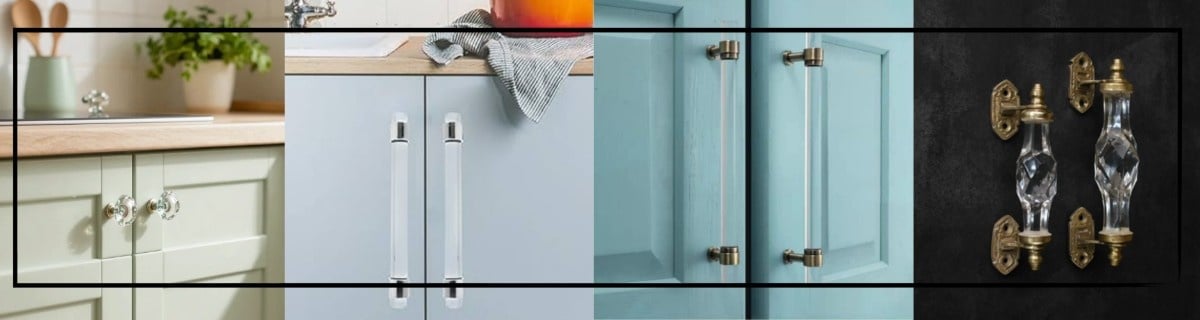
The image demonstrates this perfectly. The white cabinet on the left remains simple and understated. Yet the clear glass knobs immediately attract attention. Light passes through them. Reflections shift throughout the day. Small shadows form behind the glass. Suddenly the cabinet gains depth.
This is why clear glass works particularly well on builder-grade white. The contrast is subtle rather than dramatic. Black hardware creates strong definition. Brass introduces warmth. Clear glass creates dimension.
The effect feels lighter.
Natural daylight strengthens this relationship. Morning light creates bright highlights. Evening light produces softer reflections. Artificial lighting can make the glass sparkle after sunset. The cabinet remains neutral while the hardware provides visual movement.
For renters, this approach is especially useful. Most leases restrict painting or replacing cabinetry. Hardware becomes one of the few upgrades that creates immediate impact without permanent alteration.
The result feels intentional rather than temporary.
A basic cabinet begins to resemble custom furniture. Not because the structure changed. Because the details changed.
That distinction matters.
Interior design often succeeds through small interventions rather than large renovations. Clear glass hardware demonstrates this principle beautifully.
Eclectic interiors thrive on contrast.
Not colour contrast alone. Historical contrast.
Many people assume hardware should match everything else in a room. The image suggests another possibility. The vintage glass handles with aged brass fittings feel completely different from the sleek contemporary handles shown in the centre panels. Yet both approaches can exist within the same kitchen.
This layered approach has become increasingly popular among renters and younger homeowners.
A modern apartment often arrives with contemporary cabinetry. Flat panels. Minimal lines. Neutral colours. The architecture feels current. The personality often feels absent.
Vintage-inspired glass hardware introduces another design language.
The combination creates tension in a positive way. Modern cabinets provide structure. Vintage glass introduces character. Brass backplates reference older craftsmanship. Clean cabinet fronts maintain contemporary balance.
The room begins to feel collected rather than purchased all at once.
That is the essence of eclectic design.
The goal is not perfect matching. The goal is thoughtful contrast.
A renter might pair:
- Vintage glass pulls with modern cabinet fronts
- Antique brass details with contemporary lighting
- Traditional glass knobs alongside minimalist shelving
- Decorative hardware with simple furniture
Each element belongs to a different design era. Together they create a richer story.
Glass works particularly well in these combinations because it acts as a bridge. It feels historic and contemporary at the same time.
Cut crystal references older furniture traditions. Clean transparent surfaces feel modern.
This flexibility allows glass hardware to connect multiple styles without creating visual conflict.
The result feels personal.
Not showroom perfect.
Lived-in. Layered. Collected over time.
Those qualities increasingly define desirable interiors.
Many renters face the same challenge.
Old cabinets rarely age perfectly.
Previous hardware leaves marks. Paint chips appear around screw holes. Surface discoloration develops after years of use. Sometimes a cabinet contains multiple drilling attempts from previous tenants or owners.
Replacing hardware alone may not solve the problem.
Decorative backplates often do.
The right side of the image provides a strong example. The vintage glass handles use decorative brass mounting plates. These plates extend beyond the hardware itself and cover a larger portion of the cabinet surface.
This creates two advantages.
The first is aesthetic.
Backplates add visual weight. They make hardware feel more substantial. The cabinet gains detail and character.
The second advantage is practical.
The larger mounting surface conceals imperfections.
Small scratches disappear beneath the plate. Uneven paint becomes less noticeable. Existing hardware marks remain hidden without requiring sanding, repainting, or refinishing.
For renters, this matters significantly.
A complete cabinet restoration is rarely possible. A hardware upgrade remains accessible.
Decorative backplates essentially function as design solutions and repair solutions simultaneously.
The approach works particularly well on:
- Older bathroom vanities
- Apartment kitchens
- Vintage wardrobes
- Painted furniture
- Second-hand cabinets
Brass backplates create warmth.
Black backplates create contrast.
Decorative shapes add historical character.
Simple geometric plates create a cleaner appearance.
The cabinet looks upgraded. The previous damage disappears. The installation remains reversible.
Few design improvements offer so much value from such a small change.
Bathrooms often contain the smallest cabinetry in a home.
Yet they receive some of the highest daily use.
A vanity may only occupy a few square feet, but it influences the room every morning and every evening. Because the scale is smaller, details become more noticeable.
Glass hardware performs exceptionally well in these environments.
The image illustrates why.
The reflective quality of glass interacts naturally with mirrors, polished surfaces, and bathroom lighting. Unlike heavy metal hardware, clear glass feels lighter. It contributes visual interest without making a compact room feel crowded.
This becomes particularly valuable in rental bathrooms.
Many rental vanities feel purely functional. White cabinets. Standard mirrors. Basic fixtures. The room serves its purpose but rarely feels memorable.
Replacing hardware changes that perception quickly.
Clear glass introduces elegance through light rather than ornament.
The vanity appears brighter.
The room feels more refined.
The upgrade remains relatively inexpensive.
Another advantage involves scale.
Large hardware can overwhelm smaller vanities. Glass maintains visual presence while preserving openness. Even decorative cut-glass designs reflect light instead of creating visual heaviness.
This helps small bathrooms feel larger.
The effect becomes even stronger when paired with:
- Frameless mirrors
- White countertops
- Light wall colours
- Brass fixtures
- Soft ambient lighting
Together these elements create a layered but uncluttered environment.
The transformation often exceeds expectations because the vanity occupies such a prominent position within the room.
A small hardware change becomes a daily experience rather than an occasional visual detail.
Texture creates depth.
Without texture, even beautiful rooms can feel flat.
Renters frequently use peel-and-stick wallpaper, contact paper, or adhesive cabinet films because these products offer temporary customization. The challenge is creating enough contrast between surfaces.
Glass hardware solves this problem elegantly.
The image reveals how glass introduces a completely different tactile experience from painted wood or laminate cabinetry.
One surface absorbs light.
The other reflects it.
One feels matte.
The other feels smooth and polished.
This relationship creates what designers often call layered texture.
Consider a cabinet covered with peel-and-stick marble paper.
The printed marble provides visual texture.
A glass knob adds physical texture.
Together they create greater depth than either element could achieve independently.
The same principle applies to:
- Wood-grain adhesive films
- Linen-texture wallpaper
- Stone-look contact paper
- Floral peel-and-stick designs
- Geometric patterned surfaces
The glass becomes a focal point against the textured background.
Light enhances the effect further.
As sunlight moves through the room, reflections shift across the hardware. The surrounding surface remains stable. This contrast creates subtle visual movement.
The room feels more dynamic.
More considered.
More intentionally designed.
For renters, the combination works particularly well because both elements remain removable. Neither requires permanent modification. Yet together they create a transformation that feels custom rather than temporary.
That balance defines many successful rental upgrades.
Flexible enough to remove.
Beautiful enough to feel permanent.
Read More : Eco-Luxe: Why Linen and Hemp are the Must-Have Fabrics for Bedding
The safest way to remove renter-grade cabinet hardware is to treat it as temporary, not disposable.
Most rental kitchens come with basic knobs and handles. They do the job, but they rarely add character. Swapping them for vintage glass knobs, brass pulls, or decorative handles can completely change how a kitchen feels. The important part is making sure you can return everything to its original condition when you move out.
Start by taking clear photographs before you remove anything. Photograph each cabinet, drawer, and handle. These images become your reference later. They also help if there is ever a dispute about the condition of the cabinets.
Next, remove one handle at a time. Use the correct screwdriver size. A loose or incorrect screwdriver can strip the screw head and create unnecessary damage. Place each screw, knob, and handle in a labelled zip-lock bag. Keep everything together. Losing original hardware is one of the most common renter mistakes.
Check the existing hole spacing before buying replacement hardware. Most modern cabinets use standard centre-to-centre measurements. If your new handles require drilling additional holes, reconsider the purchase. New holes can affect your deposit.
For single-hole cabinet knobs, the process is even simpler. Unscrew the original knob and install the replacement using the same opening. No modifications. No repairs later.
Pay attention to cabinet surfaces during installation. Place a soft cloth under tools when working near painted or laminated cabinets. A dropped screwdriver can leave a visible chip in seconds.
If the old hardware has left faint marks or shadows, clean the surface gently before installing the new piece. Years of dust and grease often create an outline around handles. Mild soap and water usually remove it.
Store original hardware in a dry location. Do not leave it inside a kitchen drawer where it can get scratched, mixed up, or accidentally thrown away. Many renters place all original fittings in a single labelled storage box until move-out day.
When it is time to leave, reinstall every original piece exactly where it came from. Use the photographs you took at the beginning. Tighten screws securely, but avoid over-tightening. Excess force can crack cabinet doors or damage screw holes.
The goal is simple. Leave no evidence that a hardware swap ever happened.
This approach gives renters the freedom to personalise their space without risking repair charges. A set of vintage glass knobs, brass handles, or decorative pulls can make builder-grade cabinetry feel entirely different. Yet when the lease ends, the kitchen can return to its original state in less than an hour.
A successful renter upgrade is not just about style. It is about reversibility. The best hardware changes improve the space today and disappear completely tomorrow.
Authentic vintage hardware has a character that replicas struggle to copy.
The weight feels different. The details feel sharper. Small imperfections tell a story. Many modern reproductions imitate the look, but they often miss the material quality that made original pieces desirable in the first place.
Start with architectural salvage yards. These are among the best sources for genuine vintage knobs, handles, and backplates. Salvage dealers often recover hardware from old homes, hotels, schools, and historic buildings. You can find solid brass pieces, cut glass knobs, and hand-cast fittings that are difficult to replicate today.
Antique markets are another strong option. The advantage here is variety. You can compare different periods, materials, and styles in one place. Victorian glass, Art Deco metalwork, and mid-century hardware often appear side by side.
Online vintage dealers can also be useful, but examine listings carefully. Ask for close-up photographs. Request measurements. Genuine sellers usually provide details about age, material, and condition.
One of the easiest ways to identify authentic hardware is weight. Solid brass feels heavy for its size. Old glass knobs often contain tiny bubbles, slight irregularities, or subtle wear from decades of use. These signs are not flaws. They are evidence of age.
Read More : The 'Home Spa' Blueprint: Curating Bath Essentials for Mental Wellness
Inspect the back of the hardware whenever possible. Authentic older pieces frequently show machining marks, hand-finishing, or natural patina. Replicas often have perfectly uniform surfaces and artificially aged finishes.
Price can also be a clue. Genuine vintage hardware usually costs more because supply is limited. A complete set of matching antique glass knobs is harder to find every year. Extremely cheap listings often signal mass production rather than authenticity.
For renters and homeowners alike, mixing authentic vintage pieces with newer hardware can create a balanced look. You do not need every knob to come from the same decade. In fact, a thoughtful mix often feels more natural and collected.
The best vintage hardware adds more than decoration. It adds history, texture, and material depth. That is what makes it worth searching for. Not perfection. Character.






 SignIn / SignUP
 Forgot password
 My Orders
 My Wishlist
  My Wallet
 My Invitee
 Sell with us
 New Arrivals