Traditional spice boxes work better in modern kitchens when you keep them visible and within reach. They save movement, speed up cooking, and bring daily order to busy Indian homes. Most Indian meals require frequent spice access. A seven-compartment masala box supports that flow by keeping core ingredients ready during cooking.
Smart kitchens depend on efficiency. Traditional spice boxes fit naturally into that system. Stainless steel options resist rust and handle kitchen humidity well, which matters during Indian monsoons. Wooden spice boxes offer insulation and help protect whole spices from direct heat exposure.
Countertop placement also improves cooking rhythm. Keep the box beside the gas stove, near the induction plate, or close to the prep counter. This reduces unnecessary steps during tadka or seasoning.
Beyond function, these boxes create visual structure. They connect modular layouts with familiar cooking habits. In compact Indian apartments, where every counter section matters, a traditional spice box turns storage into an active part of kitchen design.
The masala dabba now fits naturally into smart kitchen design. It keeps Indian cooking traditions active while matching modern storage needs. This is not nostalgia sitting on a shelf. It is practical design shaped by real cooking habits.
For decades, Indian homes used the masala dabba as a daily cooking essential. Most traditional designs feature seven compartments. This layout supports regular spice combinations used across Indian kitchens, from jeera and haldi to red chilli and dhania powder.
Modern kitchens demand efficiency. The masala dabba answers that need with direct access and compact organisation. Stainless steel options resist moisture and staining. This matters in Indian kitchens where steam, spluttering oil, and heat stay constant.
Wooden versions add insulation. They help protect whole spices from heat exposure when placed near active cooking zones.
Placed on quartz counters, modular shelves, or beside induction units, the masala dabba creates a working bridge between heritage and convenience. It supports faster cooking, cleaner movement, and better countertop discipline. Smart kitchen design works best when tradition solves modern problems.
Read More : A Beginners Guide to Identifying Vintage Indian Metals
Countertop spice storage saves time because it keeps essential ingredients within arms reach. That simple shift improves kitchen workflow immediately.
Indian cooking often moves fast. Tempering spices takes seconds. Delays can burn mustard seeds or overcook aromatics. Pantry storage forces extra movement during critical moments.
Countertop access solves that problem. It reduces back-and-forth steps between cooking zones and storage shelves. This matters even more in compact Indian apartments, where kitchens often range between 40 and 80 square feet.
Visible storage also improves cooking consistency. You spot refill needs quickly. You avoid duplicate purchases. You maintain fresher rotation.
There is a practical hygiene benefit too. A dedicated spice box prevents multiple loose packets from cluttering drawers and attracting moisture.
Smart kitchens depend on motion efficiency. Professional kitchen studies often prioritise reach zones within one arms span for frequently used tools. The same logic applies here.
Keeping spices on the counter supports smoother prep, quicker seasoning decisions, and a more intuitive cooking rhythm. Better workflow starts with better placement.
These seven spices handle most Indian daily cooking. They save time and keep flavour decisions quick during active cooking.
Turmeric builds colour and warmth. Indian households use it daily in dals, sabzis, and gravies.
This controls heat with precision. Airtight storage matters because Indian humidity can harden fine powders.
Cumin releases aroma within seconds in hot oil. It forms the base of many North and West Indian dishes.
These add sharpness and texture. They are essential for tempering across Maharashtrian and South Indian kitchens.
This adds body without overpowering. It balances stronger spices and rounds out gravies.
This works best as a finishing spice. A small amount lifts aroma instantly.
Hing deepens flavour fast. Even a quarter teaspoon changes lentils and vegetable dishes.
A standard masala box usually offers seven compartments for this exact reason. It matches practical Indian cooking patterns. The setup keeps your essentials visible, organised, and ready.
The right material depends on your kitchens heat, moisture levels, and daily cooking intensity.
| Material | Plain Benefit | Useful Fact |
| Brass |
Adds durability and visual richness |
Forms a protective patina over time |
| Wood |
Reduces heat transfer |
Helps shield spices from direct warmth |
| Stainless Steel |
Handles moisture best |
Food-grade steel resists rust and staining |
Brass suits statement kitchens. It pairs well with darker laminates and stone counters. Regular polishing keeps its surface bright.
Wood suits softer interiors. It brings warmth to modular kitchens. It also feels cooler to touch near cooking zones.
Stainless steel suits daily heavy use. It handles steam, oil splatter, and frequent cleaning with ease.
Indian kitchens often deal with heat, humidity, and strong spices. Stainless steel performs best under those conditions. Wood works well for moderate use. Brass suits buyers who value visual character and do not mind upkeep.
Spices stay fresher when heat, light, and moisture stay controlled. Good storage protects flavour and saves replacement costs. Ground spices lose strength faster than whole spices. Most powdered spices begin losing aroma within six months. Whole seeds usually last longer. Countertop storage works well only with smart placement.
Keep distance from active heat. Place your spice box at least 60 centimetres from the gas burner. Indian cooking creates constant surface heat. Daily tadka and pressure cooking raise nearby temperatures quickly. Too much heat dries natural oils. This weakens flavour release during cooking. Wooden boxes help here. Wood slows heat transfer and protects contents from quick temperature spikes.
Block harsh sunlight. Direct sunlight breaks down colour and aroma compounds. Red chilli powder fades quickly under strong exposure. Turmeric also loses brightness. Stainless steel performs well because it blocks light completely. Place your box under upper cabinets or along a shaded prep section.
Protect against monsoon moisture. Humidity causes clumping and dulls aroma. This matters across Indian regions with long wet seasons. Choose tight-fitting lids. Stainless steel lids offer stronger sealing than many loose wooden tops.
Store only working quantities. Refill small batches every week. Many Indian homes buy masalas in bulk. Keep backup stock inside airtight pantry jars. Fresh rotation improves consistency.
Use dry spoons only. Moisture enters fast through wet utensils. Even small water contact can spoil powders. Brass and steel compartments clean easily after accidental spills.
Clean the box regularly. Old spice residue affects fresh stock. Wipe compartments with a dry cloth every ten days. A monthly deep clean keeps aromas pure.
Fresh spices perform better. They bloom faster in oil and release fuller flavour. Good countertop storage protects every meal before cooking even begins.
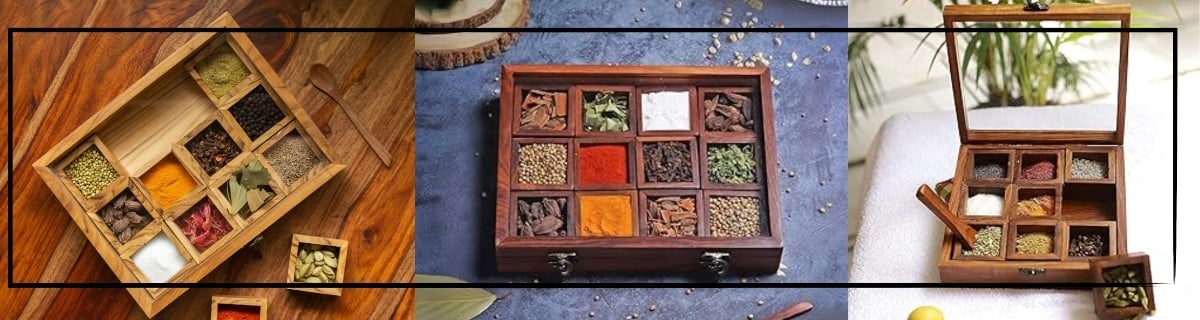
Vintage spice boxes add warmth when styling stays restrained. One well-placed piece creates character without crowding the kitchen. Minimalist kitchens often feel visually sharp. Traditional forms soften that structure. This balance works especially well in Indian modular homes.
Let one piece lead the counter. Place the box where it can stand clearly. Avoid surrounding it with extra dcor. A single focal object creates stronger visual order. Brass works beautifully against white quartz or pale granite. Its warm tone breaks visual monotony.
Match materials with nearby details. Consistency makes styling feel intentional. Pair brass boxes with warm cabinet handles. Pair wooden boxes with chopping boards or open teak shelving. This creates flow. Wood also brings tactile comfort. It softens harder surfaces like laminate and engineered stone.
Keep placement practical. Good styling must support cooking. Position the box near your prep zone. Function always comes first in smaller Indian kitchens. Most urban apartment kitchens measure under 100 square feet. Surface discipline matters.
Limit surrounding objects. One ceramic jar or a small herb planter is enough. Minimal arrangements keep the box visible. Stainless steel boxes work especially well in sleek layouts. Their reflective finish complements appliances and modern fittings.
Use calm background textures. Muted tiles and matte backsplashes create contrast. This helps vintage materials stand out naturally.
Allow natural ageing. Brass develops patina over time. Wood deepens in tone with regular use. These changes add visual depth.
A vintage spice box succeeds because it works hard while looking purposeful. It stores daily essentials and gives minimalist kitchens a distinctly Indian sense of presence.
Smart labeling makes traditional spice storage more efficient. It helps you track freshness, manage refills, and reduce kitchen waste. A masala dabba may look fully traditional, but small digital additions can improve daily use. This approach blends familiar storage with practical kitchen technology.
Indian households often stock 15 to 30 spices. Managing that manually becomes difficult, especially during bulk festival shopping or monthly grocery runs. Digital inventory tools solve that problem.
Small adhesive labels create the first layer of control. Use waterproof labels that resist oil splashes and kitchen humidity. Clear printed names improve visibility during fast cooking. This matters during active Indian meal preparation, where quick access shapes workflow.
For deeper organisation, QR code labels offer real value. A quick phone scan can open your digital inventory app instantly. This lets you check refill status, purchase dates, and quantity notes. Several kitchen inventory apps now support barcode and custom item tracking. Some even allow low-stock reminders. This reduces duplicate purchases.
Buyers often forget existing stock while shopping. This happens frequently with spices stored in multiple packets. Digital tracking solves that.
NFC tags offer another smart option. These small chips stick beneath the lid or inside the base. A simple phone tap opens your spice log. NFC works especially well for modular kitchens focused on clean surfaces because no visible scanning code interrupts the design.
Material choice matters here. Stainless steel spice tins pair best with external adhesive labels. Their smooth finish supports stronger label grip. Wooden boxes work better with engraved markers or attached brass nameplates. Brass surfaces often need removable label options to avoid residue marks.
Smart labeling also improves freshness control. Add refill dates to each tracked compartment. Ground spices generally retain peak flavour for about six months. Digital reminders help rotate stock on time. This protects taste and avoids stale masalas.
Families who cook daily benefit most from this system. It reduces guesswork during weekly planning. It also helps when multiple family members share kitchen responsibilities.
The goal is not overcomplication. It is clarity. A simple digital record paired with a traditional spice tin creates better kitchen discipline. The result feels practical, not technical. A masala box has always organised Indian cooking. Smart labeling simply updates that role for modern kitchens.
Countertop spice storage works only when placement stays efficient. Smart positioning keeps surfaces useful and visually clean.
Indian kitchens often work within tight layouts. Many apartment kitchens offer less than 80 square feet. Every surface decision matters.
The best strategy is vertical thinking. Use wall-mounted ledges near the prep zone. This frees counter space while keeping spices accessible. Wooden ledges add warmth. Steel racks offer stronger moisture resistance.
Corner placement also works well. Counter corners often remain underused. A compact spice box fits neatly here without interrupting movement. This creates function from dead space.
Choose stack-friendly designs. Some modern masala boxes include tiered or double-layer formats. These store more while using the same footprint. Stainless steel handles this especially well because slimmer walls create more internal capacity.
Keep only active essentials outside. Do not crowd the counter with backup stock. Use your countertop box for daily spices only. Store extras inside cabinets. This keeps the surface disciplined.
Pair functions where possible. Place the spice box beside your oil dispenser or utensil crock. Grouping cooking essentials creates one organised work zone. This improves movement efficiency.
Rolling trays offer flexibility. A small tray lets you move the full spice setup when cleaning or prepping. Brass and wooden boxes benefit here because trays protect delicate bases from water exposure.
Use visual breathing room. Leave open surface around the box. Minimal spacing makes the kitchen feel larger.
Smart kitchens succeed through restraint. A well-placed spice box should support cooking, not compete for space. Good countertop planning gives every item a clear purpose and position.
Read More : From Spices to Statement: 5 Ways to Style Vintage Spice Boxes (Masala Dabbas) Beyond the Kitchen
Traditional spice tins offer surprising versatility. Their compartmented design supports organised storage far beyond everyday masalas. Most Indian masala boxes include seven individual sections. This format evolved for cooking efficiency, but that same structure solves many modern organisation needs.
For buyers choosing quality brass, wood, or stainless steel storage, flexible use adds practical long-term value. A well-made tin should serve your kitchen for years, even as your habits change.
Turn it into a loose-leaf tea station. Tea storage becomes simpler inside divided tins. Indian households often keep multiple blends open at once. Loose packets create clutter and lose freshness faster. A traditional tin keeps each variety contained and visible. It works well for Assam tea, Darjeeling leaves, green tea, Kashmiri kahwa blend, tulsi tea, dried ginger flakes, and cardamom pods. Stainless steel works especially well here. It resists flavour absorption and blocks outside moisture. That matters during humid monsoon months, when exposed tea leaves soften quickly. Placed beside an electric kettle, the setup creates a compact tea corner with faster morning access.
Build an efficient coffee companion box. Coffee routines often involve small ingredients scattered across jars. A divided tin solves that. It keeps finishing ingredients organised in one compact station.
| Storage Item | Daily Advantage |
| Brown sugar |
Faster sweetening |
| Cinnamon powder |
Easy flavour layering |
| Cocoa dust |
Better garnish access |
| Vanilla crystals |
Controlled use |
| Chocolate flakes |
Cleaner topping prep |
| Nutmeg powder |
Fresh finishing |
| Coffee stirrers |
Less drawer clutter |
Wooden tins suit this beautifully. Wood reduces sudden temperature transfer. That helps protect aromatic toppings from nearby appliance heat. This setup works especially well in Indian urban homes where kitchen counters often serve multiple purposes.
Organise baking ingredients better. Small baking ingredients often disappear into crowded pantry shelves. Traditional tins create visible order. They work beautifully for baking soda, baking powder, dry yeast, chocolate chips, sprinkles, cinnamon, and sea salt. Compartment separation reduces mistakes during rushed preparation. This matters during festive baking sessions. Diwali and Christmas home baking often involves repeated ingredient access. Brass tins add extra visual appeal here. They look polished on open shelving and pair beautifully with ceramic bakeware.
Store dry garnishes for faster finishing. Finishing ingredients often sit forgotten in random packets. A dedicated garnish tin solves this. Use it for chilli flakes, toasted sesame, kasuri methi, roasted garlic bits, crushed peanuts, fried onions, and dried coconut. This setup supports both Indian and fusion cooking. Stainless steel offers the best sealing here. It helps preserve crisp texture longer.
Create a portion-controlled healthy snack box. Traditional tins also work well outside cooking. Use compartments for daily measured snacks. Store almonds, walnuts, raisins, makhana, pumpkin seeds, dates, and sunflower seeds. Nutrition experts often recommend portion visibility for mindful snacking. A divided tin makes quantity control effortless. This works especially well for study desks and work-from-home routines.
Repurpose older tins for utility storage. A spice tin remains useful even after kitchen retirement. Older boxes work beautifully for:
| Utility Use | Practical Benefit |
| Sewing supplies |
Easy sorting |
| Paper clips |
Desk organisation |
| Batteries |
Compact visibility |
| Safety pins |
Safer access |
| Earbuds |
Reduced tangling |
| Small hardware |
Better storage control |
Wooden tins fit especially well in living spaces because they blend naturally with furniture. This extends product life. It also reduces waste.
Why multi-use value matters. Good storage should adapt. That flexibility makes your purchase smarter. Food-grade stainless steel often lasts decades. Brass strengthens visually through natural patina. Wood develops richer grain depth over time. A traditional spice tin succeeds because it evolves with your home. That makes it more than kitchen storage. It becomes a lasting organisational tool.
Regular care protects appearance, hygiene, and performance. Simple maintenance keeps your spice box reliable for years. Indian kitchens produce constant airborne grease. Daily tadka, shallow frying, and pressure cooking release fine oil particles. These settle silently across nearby surfaces. Without routine cleaning, buildup affects both function and freshness.
Clean lightly every day. Daily wiping prevents stubborn residue. Use microfiber cloth, mild soap water, and a dry cotton towel. This takes under two minutes. Small effort prevents aggressive scrubbing later.
Follow material-specific cleaning.
| Material | Best Cleaning Method | Avoid |
| Brass |
Soft cloth and lemon paste |
Strong chemical polish |
| Wood |
Dry wipe and food-safe oil |
Excess moisture |
| Stainless Steel |
Mild soap and sponge |
Abrasive scrubbers |
Proper cleaning protects surface life. It also preserves visual finish.
Read More : The Heritage Kitchen Revival: Integrating Vintage Indian Aesthetics into Modern Homes
Position it outside direct splatter zones. Placement matters as much as cleaning. Keep your spice box about 50 centimetres from active burners. This reduces grease exposure significantly. It also protects internal contents from heat stress. Rolling trays help reposition easily during heavy cooking.
Deep clean compartments every month. Empty every section fully. Wipe each compartment separately. Allow full drying before refill. Even slight trapped moisture causes clumping. This matters strongly during coastal and monsoon-heavy Indian regions.
Care for brass properly. Brass naturally darkens over time. This oxidation is normal. Many buyers prefer that aged finish. If you prefer shine, polish every four to six weeks. Too much polishing weakens surface integrity. Gentle care works best.
Nourish wooden surfaces. Wood responds well to occasional conditioning. Apply food-safe mineral oil lightly every two months. This prevents cracking. Indian summer heat often dries exposed wood faster than expected. Conditioning keeps the grain stable.
Prevent stainless steel spotting. Always dry steel fully after washing. Hard water leaves mineral marks. This is common across many Indian cities. A soft dry cloth prevents this easily.
Check lid seals often. Loose lids affect freshness. Inspect fit every few weeks. Secure closure protects spices from grease, humidity, and aroma loss. This small habit extends ingredient life noticeably.
Clean storage improves every cooking session. Fresh interiors preserve aroma. Smooth lids improve workflow. Organised surfaces reduce stress. A well-maintained spice box feels dependable. It supports the rhythm of everyday Indian cooking while keeping your countertop disciplined and visually sharp.






 SignIn / SignUP
 Forgot password
 My Orders
 My Wishlist
  My Wallet
 My Invitee
 Sell with us
 New Arrivals