Door knocker etiquette is a quiet social language that has shaped how people approach homes for centuries. From the weight of a single knock to the patience that follows, the way a door knocker is used reflects respect, awareness, and cultural understanding. This article explores how to use door knocker properly, why these small actions matter, and how traditions around knocking have evolved across history and modern life.
The proper knock technique begins with respect. Door knocker etiquette is not about force. It is about signal. A door knocker speaks before you do. It says someone is here, waiting, and willing to be patient.
The proper knock technique starts with how you hold the knocker. Lift it slowly. Let it rest for a second. This pause matters. It shows care. Then let it fall with control. The sound should be clear, not sharp. Loud enough to be heard inside, but not loud enough to startle.
In many old homes, doors were thick and heavy. The knock needed weight, not speed. That idea still works today. One firm knock is better than many quick taps. It gives the person inside time to respond. It avoids confusion.
How to use door knocker also depends on timing. After knocking, wait. Do not knock again too fast. Give at least twenty to thirty seconds. People may be walking from another room. A second knock is fine, but only after patience.
The rhythm matters too. A steady knock feels calm. An uneven knock feels rushed. In social spaces, calm is polite. In formal settings, calm is expected.
Children often knock with excitement. Adults knock with intent. Door knocker etiquette asks for adult balance. Neither shy nor demanding.
In older cultures, the knock carried meaning. A soft knock meant family. A firm knock meant a visitor. A very loud knock meant urgency. These codes still live quietly in our minds.
The proper knock technique is simple. Lift. Pause. Release. Wait. This small act shows manners without words.
Read More : Door Knocker Materials Guide: Brass vs. Iron vs. Bronze - Complete Comparison
Cultural variations shape door knocker etiquette in deep ways. The same knock can feel polite in one place and rude in another.
In South Asia, door knockers were once common in havelis and old town homes. Guests were expected to knock once and wait. Repeated knocks were seen as impatience. Elders valued silence after the knock. Silence meant respect.
In parts of Europe, door knocker etiquette developed with class and status. In England, different knockers existed for different guests. One knocker for family. Another for servants. Another for tradesmen. How to use door knocker was not only about sound but also about identity.
In Mediterranean cultures, a stronger knock was normal. Homes were loud. Streets were busy. A soft knock could disappear in noise. Here, firmness was not rude. It was practical.
In East Asian cultures, door knockers were less common, but the idea of announcing oneself gently was strong. The goal was harmony. A knock should not disturb the household.
In Middle Eastern homes, knocking carried spiritual meaning. It was tied to permission. One knock meant asking. Waiting meant honoring privacy. Door knocker etiquette blended social rule with moral value.
Modern cities mix cultures. This makes sensitivity important. When unsure, choose the gentler option. A calm knock works almost everywhere.
Cultural variations remind us that doors are not just objects. They are borders between worlds. The knock is a request to cross.
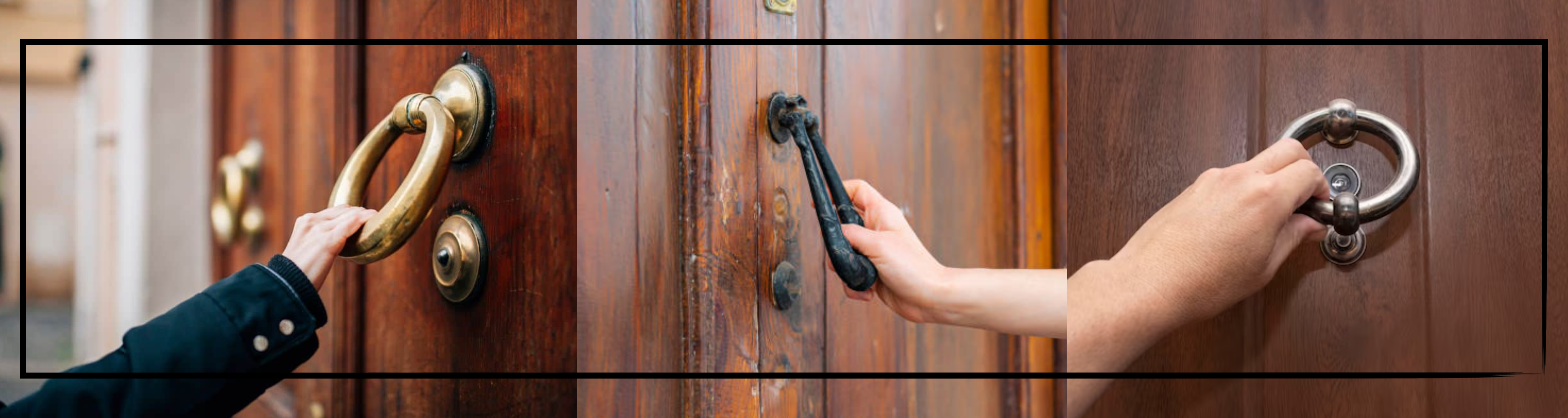
When to use knocker vs. doorbell depends on place, purpose, and time. Both serve the same goal, but their tone is different.
A doorbell is instant. It fills the space. It demands attention. A door knocker is slower. It feels human. It carries effort.
Door knocker etiquette suggests using the knocker in quiet settings. Heritage homes. Religious buildings. Old neighborhoods. Places where sound echoes or where calm is valued.
Doorbells suit modern apartments. Large buildings. Homes with multiple floors. Places where the knocker sound may not travel far.
Time matters. Early morning or late night visits need care. A knocker allows control. You can knock softly. A doorbell often has one volume.
How to use door knocker becomes important when visiting elders. Many elders prefer a knock. It feels familiar. It feels personal.
In formal visits, a knocker shows intent. It says you chose effort over ease. In casual visits, a bell may feel fine.
There is also repair and reliability. Doorbells fail. Knockers do not need power. In many old homes, the knocker remains the trusted choice.
Using the right tool shows awareness. Awareness is the core of door knocker etiquette.
Historical etiquette rules around door knockers were clear and strict. They were taught, not guessed.
In medieval Europe, knocking too loudly could signal threat. Castles and walled homes treated loud knocks as warning signs. A controlled knock showed peaceful intent.
In Victorian times, manuals explained how to knock. Gentlemen were advised to knock once and wait. Servants were trained to recognize patterns. Door knocker etiquette was part of social education.
In Indian royal courts, messengers used specific knock rhythms. Each rhythm matched rank. This avoided confusion and chaos.
Religious institutions also set rules. Monasteries required slow, spaced knocks. Silence after the knock was part of discipline.
Women visitors were often advised to knock lightly. This reflected social norms of the time. These rules were unequal, but they shaped habits that still echo today.
The idea behind these historical etiquette rules was order. Homes were private spaces. Entry was not automatic. The knock respected that boundary.
Modern life is faster, but the value of pause remains. Knowing these roots adds depth to how to use door knocker today.
Read More : How to Install a Door Knocker: Complete Step-by-Step Guide
Modern considerations reshape door knocker etiquette without erasing it. Life has changed, but manners adapt.
Security systems now record sound and motion. A calm knock avoids false alarms. Aggressive knocking can trigger alerts.
Remote work has changed home life. People may be in meetings. A door knocker allows measured sound instead of sudden rings.
Health awareness matters too. Touching shared surfaces is now a concern. Using the knocker gently and briefly reduces contact.
Design also plays a role. Modern knockers come in many forms. Some are heavy. Some are light. Learning how to use door knocker means understanding its weight and sound.
Social expectations are softer now, but respect is still noticed. A patient knock feels thoughtful. A rushed knock feels careless.
Delivery culture has changed habits. Many knocks today are quick and repeated. This creates stress. Door knocker etiquette suggests slowing down, even in busy times.
Teaching children matters. Children learn manners through small acts. Teaching them how to knock teaches patience and respect.
In apartments where knockers are rare, the idea still applies. Even knocking with knuckles follows similar rules. Control. Pause. Wait.
Modern considerations show that etiquette is not old fashioned. It is flexible. It adjusts while keeping its core.
Door knocker etiquette is about awareness. How to use door knocker is not only a technical act. It is social language.
A good knock shows respect for space. It shows patience. It shows understanding of culture and time.
Across history, regions, and homes, the knock has carried meaning. It still does.
Using a door knocker well costs nothing. It leaves a good impression. It turns a simple visit into a polite exchange.
Read More : Door Knocker Styles Guide: Matching Hardware to Your Home's Architecture
In a world full of noise, a thoughtful knock still speaks clearly.






 SignIn / SignUP
 Forgot password
 My Orders
 My Wishlist
  My Wallet
 My Invitee
 Sell with us
 New Arrivals