Beaded handbags can hold up well when you use them for what theyre meant for, occasions, evenings and light carrying. The weak spots are fairly predictable. Bead thread can loosen. The ring where the strap meets the body can pull against the fabric. Linings can peel or fray. Closures can weaken with repeated use. Storage matters too. A hand-beaded bag sitting safely in a dust bag and coming out for a few functions a year faces a very different life from one squeezed into a packed cupboard, dragged through humid monsoons and filled until the chain starts digging into the fabric.
And then theres the worry every buyer understands. You use the bag twice and spot a couple of beads at the bottom. Next time, there are more. What looked like a small loose thread suddenly feels like the beginning of the end.
So, what should you check before buying? Which parts deserve a closer look? And once the bag is yours, what actually helps it last? This guide breaks down those weak points and the simple habits that protect them.
Yes. A well-made beaded bag can handle functions, dinners and evenings out, especially when youre carrying a phone, keys and a small wallet. Thats the sweet spot for this kind of bag.
Daily commuting is a different story. A laptop, steel water bottle, heavy pouch and all the other things that somehow end up in your handbag put repeated strain on the beadwork, lining and strap joins. Add a crowded Mumbai local or a packed bus where the bag gets pressed, pulled and knocked around, and delicate construction starts showing its limits.
Heres the useful bit: construction matters more than price. A costly beaded handbag can have continuous-thread beadwork where one damaged section affects a longer run of beads. A cheaper bag with properly anchored beadwork may handle everyday occasion use more securely.
Look closely at how the beads are held. When each section is properly secured, a loose bead has less chance of turning into a larger patch of missing beadwork. The same principle applies to the strap join and closure. These parts carry stress whenever you pick up the bag or open it.
Think of the bag as occasion luggage rather than a daily workhorse. Carry the essentials. Give the beadwork some breathing room. Store it properly afterwards.
That approach makes much more sense than judging durability from the price tag alone.
A beaded bag usually gives trouble at one of four points: the beadwork, the strap join, the lining or the closure. Each has a different weak spot, and knowing where to look makes it much easier to judge a bag before buying it.
| Part | What goes wrong | When you notice | Can you spot it before buying? |
| Beadwork |
One cut thread can release a whole row of beads |
During regular use |
Yes, inspect how evenly the rows are secured |
| Strap or handle join |
The loop or ring fails before the chain itself |
Varies between bags |
Partly, zoom into the join |
| Lining |
A glued lining can bubble and peel, especially with humidity |
After repeated use |
Yes, interior photos often reveal the construction |
| Closure |
Zip teeth can separate, sliders can stick and fabric around the zip can fray if the bag is repeatedly forced shut when its full. |
With repeated opening and closing |
Yes, the closure type is usually shown in the details |
Beadwork is often the biggest durability clue, because one loose thread can affect far more than one bead.
Look closely at how the beads are secured to the fabric base. With individually anchored beadwork, small groups are secured separately. A loose bead usually stays a small problem. The surrounding work has its own anchor points.
Continuous-thread beadwork works differently. Rows can look beautifully neat and uniform, but one cut or badly snagged thread may release several beads along the same line. Suddenly, a tiny snag has created a visible gap.
Thats the useful lesson here: perfectly even beadwork isnt automatically stronger beadwork.
Slight irregularity can simply be part of handwork. A loose thread sitting at a high-stress point is a different matter. When youre checking product photos, zoom into the bead rows and look for exposed threads, loose sections or places where the beads appear poorly secured to the base.
The strap join deserves more attention than the chain itself because that small connection carries the load.
On a chain-strap bag, the metal chain is usually not the part doing all the hard work. Look at the ring, loop or stitched section where that chain meets the fabric body. Your phone, wallet and keys pull down from that point every time you carry the bag.
Then theres movement. A stationary load is one thing. A bag swinging against your hip while you walk through a crowded function puts repeated strain on the same few stitches.
Product photos can help, though they rarely show every construction detail. Zoom in. Check whether the chain is attached through a properly secured loop and whether the surrounding fabric looks firmly stitched.
Once you own the bag, carrying it by the body when youre sitting or moving through a crowded space can reduce unnecessary pulling on the chain join. Small habit. Useful difference.
A stitched lining generally gives you a more secure construction than one that relies mainly on adhesive.
Lining problems often stay hidden because everyone looks at the outside first. Fair enough. Thats where all the pretty beadwork is. Inside, though, the lining takes its own share of wear from wallets, keys, phones and repeated opening of the bag.
Glued linings can bubble or peel when adhesive loses its grip. Humidity can make that more troublesome, particularly in Indian cities where monsoon moisture hangs around for weeks and cupboards may stay closed for long stretches.
Have a look at the interior photos before buying. Youre looking for a clean seam where the lining meets the bag body. A stitched edge gives you something concrete to inspect.
After use, give the bag a little time to air in a dry indoor space before storing it. Straight into a damp cupboard is asking fabric and lining to deal with moisture they didnt need.
For occasional use, a simple flap or drawstring closure has fewer moving parts to worry about, while magnetic snaps and zips each have their own wear points.
Magnetic snaps are convenient. They also gradually lose holding strength through repeated use, particularly when the bag is packed tightly and the two sides have to pull against each other.
Zips have more parts in motion. Teeth can separate, sliders can stick and fabric around the zip can fray if the bag is repeatedly forced shut when its full.
Flap closures are comparatively straightforward because theres less hardware moving every time you open the bag. Drawstrings have a similar advantage when the construction around the opening is secure.
Match the closure to how youll actually use the handbag. If youre taking it to a function with a few essentials inside, a simpler closure can do the job comfortably. For a bag that gets opened dozens of times in a day, the closure becomes another part worth inspecting closely before you buy.
You can check most of a beaded bags important construction details from your phone before placing the order. No specialist knowledge needed. Just slow down for five minutes and actually zoom into the photos.
Zoom into the beadwork
Look closely at the rows rather than judging the overall pattern. Very even rows can indicate continuous-thread work, while slight irregularity often points towards individually anchored sections. That distinction matters because a cut continuous thread can release a longer run of beads.
Find the strap join
Go straight to the place where the chain or handle meets the fabric. Is the strap stitched into a reinforced section? Or does the whole load sit on one small ring? Product photos dont always give you the answer, so zoom in as far as the image allows.
Look at the interior photo
An inside photograph is surprisingly useful. Check the edge where the lining meets the bag. A visible stitched seam gives you something concrete to inspect, while a visible glue line deserves closer attention, particularly if you live somewhere humid.
Read the material field
Skip the flowery description for a moment and find the specifications. Glass beads and cotton tells you much more about construction than a paragraph full of adjectives. Material information helps you understand what youre actually buying.
Check the closure type
Match the closure to your routine. A magnetic snap may work perfectly for a small evening bag. A zip needs a little more attention if you expect to open and close it constantly. Simple, but worth thinking about before checkout.
Check the size against your own essentials
Take out your phone, wallet, keys and whatever else you normally carry. Then compare those dimensions with the bag. Plenty of buying disappointment comes from a bag being smaller than expected rather than from poor workmanship.
Check the return window
Read the return terms before paying. If the bag arrives and something looks different from the listing, youll already know what your options are.
On IndianShelf, every product page lists material and dimensions in the specifications block, so start there before getting distracted by the photographs.
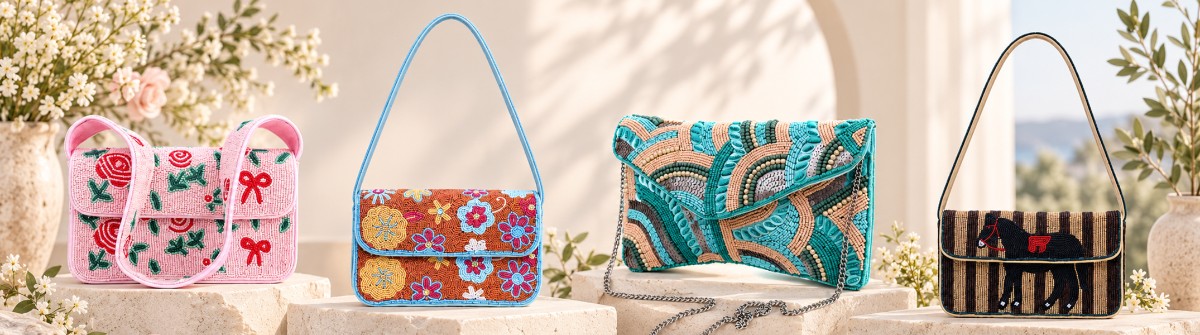
The cupboard can do more damage to a beaded bag than a few evenings out if you store it carelessly. Wedding season ends, the bag goes into the cupboard, and there it sits for months with dust, moisture and other bags pressing against it. Come the next function, you pull it out and wonder why the lining feels odd or a few beads have gone loose.
Humidity is a big part of the problem.
A dry, stable storage spot gives the bag a better chance of staying in good shape. Textile conservation guidance recommends keeping humidity reasonably stable because repeated changes in moisture can stress textile materials. High humidity can also encourage mould and create trouble for adhesives.
For Indian homes, this matters even more during monsoon. A closed cupboard can trap damp air, especially in coastal cities. Keep the bag away from visibly damp walls and places where moisture tends to collect.
Store your beaded handbag away from direct sunlight. Light can fade textile colours and gradually weaken fibres. Once the colour has faded, you cant simply put the bag back in the cupboard and expect it to come back.
A closed cupboard is fine. A dark storage box works too.
You dont need to turn your cupboard into a museum. Just avoid leaving the bag near a sunny window for months.
Lightly stuff the bag before storing it so the fabric body keeps its shape. Acid-free tissue is a good option for long-term textile storage, while a soft, clean cloth can work for ordinary home storage. Conservation guidance recommends suitable padding to reduce sharp folds and pressure on textiles.
Keep the stuffing loose. Youre supporting the bag, not trying to inflate it like a cricket ball.
A crowded cupboard deserves some attention too. Dont pile heavy handbags, boxes or clothes on top of a beaded piece. Constant pressure can squash the beadwork and crease the base.
A dust bag or covered box keeps dust and light off the handbag while its sitting unused. Conservation guidance recommends protecting stored textiles from dust and unnecessary exposure during storage.
Give each bag a little breathing room. Beads can catch on neighbouring fabric, chains or loose threads when everything is packed together.
If you keep handmade beaded bag charms, storing them separately when theyre not in use can also reduce the chance of anything catching on the beadwork.
Deal with dust and small marks before storage, using as little moisture as possible. Textile conservation guidance recommends clean, dry conditions for stored textiles and careful handling during cleaning.
Spot-cleaning makes more sense than soaking the whole bag. Beaded handbags can contain several materials joined together, so water that seems harmless on the outside may reach the lining, thread or fabric base.
And give the bag a little care while carrying it. Holding the body when youre moving around can reduce the constant pulling that happens when a handbag is swung around by its chain.
After a function, let it settle in a dry indoor spot before storing it. Then stuff it lightly, cover it and put it somewhere dark.
Thats pretty much the boring routine that saves you from opening the cupboard months later to find a bag that has aged faster than you expected.
Yes, many beaded handbag problems can be repaired, especially when youre dealing with loose beads or a strap join that has given way. Thats actually one nice thing about a hand-beaded bag. A local tailor or embroidery person can often work on the same fabric-and-thread construction used to make it in the first place.
Found a few beads at the bottom of your cupboard? Keep them.
Seriously. Put them in a little zip pouch. Youll thank yourself later if the same beads are needed for a repair. Matching tiny beads after six months can become a ridiculous treasure hunt.
Loose beadwork is usually the easier fix. A local embroidery shop can stitch the beads back onto the fabric base, provided the surrounding thread and fabric are still in decent condition.
Then comes the strap join.
If the small ring or loop where the chain meets the bag has pulled away, a good tailor can often reinforce and stitch that section again. That repair deserves proper attention because the join takes the weight whenever youre carrying the bag, especially while walking through a crowded wedding hall where everyone seems to be going in three directions at once.
Peeling lining is a different headache. Once a glued lining starts bubbling or coming away, getting it neat again can be quite difficult. Replacement may be possible, depending on the bags construction.
A broken zip can usually be replaced too. Fresh stitching around the zip may remain visible. Personally, Id take a working bag with a slightly visible repair over a dead zip sitting there looking pretty.
For newly delivered pieces, check the sellers return policy before attempting any repair yourself. IndianShelf currently lists a 15-day return window, including free return by post for eligible returns, but before filing because policies can change. If a bag arrives faulty, a return is the cleaner route.
Pick the bag according to how youll actually use it. A wedding clutch that comes out four times a year doesnt need to behave like your everyday office bag. And honestly, asking a beaded bag to survive daily Mumbai travel, a packed local and a water bottle is setting up both of you for disappointment.
| How youll use it | What to look for | Example |
| A few functions a year |
A well-made beaded clutch or clutch-sling |
Golden Chevron Hand Beaded Party Clutch Sling |
| Day-to-night, used often |
Chain strap and a darker base that hides everyday marks |
Midnight Mosaic Hand Beaded Sling |
| Hands-free at a wedding |
A clutch-sling with a chain instead of a hold-only clutch |
Gilded Mosaic Beaded Clutch with Chain Strap |
| Crowded function where you want the contents secure |
A flap closure rather than an open top |
Handcrafted Floral Beaded Shoulder Bag |
| Statement piece for occasional use |
All-bead construction and a light load |
Handmade Orange Beaded Tote Bag |
Statement piece for occasional use All-bead construction and a light load Handmade Orange Beaded Tote Bag
For Indian weddings and family functions, a chain sling is usually easier when your hands are busy with a phone, prasad, a dupatta or somehow three things you never planned to carry. If the handcrafted beaded bag mostly lives in your cupboard between occasions, give more attention to construction and storage than to how dramatic it looks in the product photo.
It can happen. One loose bead doesnt mean your bag is about to fall apart dramatically like some daily-soap plot twist. Threads can catch on bangles, zippers or even another bag inside the cupboard. If a bead comes off, keep it somewhere safe. Dont chuck it out. That tiny thing may be exactly what a tailor needs for a repair.
Yes, but you souldnt take it out for a heroic battle with Mumbai rain. Light dampness is one thing. Getting properly soaked is another. Keep it away from wet seats, dripping umbrellas and that suspicious puddle near the building entrance. If the bag gets damp, let it dry indoors before putting it back in the cupboard.
Because someone actually worked on them by hand. Beads may sit a little differently. A pattern can have tiny variations. One flower might be slightly wonky. Honestly, thats part of the charm. Handwork isnt supposed to look like it came out of a photocopy machine. If you want every bead in exactly the same position, well machine-made bags exist.
Nope. Weight alone tells you very little. A heavier bag may simply have more beads, thicker fabric, metal hardware or a heavier lining. None of that automatically means better construction. Youd rather have a lighter bag with secure beadwork and a properly attached strap than a heavy one that starts pulling at its seams.
Yes, it can be but you souldnt casually hand one over to the local dry cleaner and say, Bhaiya, same as my suit. Beads, threads, fabric and adhesives can react differently to cleaning. For a small mark, start with gentle spot cleaning and very little moisture. If the stain is serious, ask the cleaner whether theyve handled embellished bags before.
Keep the load sensible. Your phone, wallet, keys and a small pouch are fine for the kind of occasional use these bags are meant for. Once the bag starts carrying a bottle, power bank, makeup kit, charger, sunglasses and random receipts from 2023, things get silly. Use a sturdier everyday bag for that circus.
A beaded bag has four areas that deserve attention: the beadwork, strap join, lining and closure. Check the beadwork and strap connection before buying, then store the bag properly once the function is over, particularly through Indias humid monsoon months.
If youre looking for something for weddings, festive evenings or those family functions where the plain handbag suddenly feels painfully boring, have a look at our handcrafted beaded bags.


 SignIn / SignUP
 Forgot password
 My Orders
 My Wishlist
 My Wallet
 My Invitee
 Sell with us
 New Arrivals